Showing posts with label climate change. Show all posts

Sunday, 6 July 2014

Flooding and Climate Change

My cousin everybody! It could not be better said. Check out the video.


She is a political activist, feminist and comedian who does not usually focus on climate change issues but good to see that she is touching on the subject here within a political debate on Question Time. She inspires me to be a better feminist, as we all should be. You should check out her blog and Twitter.

Hope you have a good day!


Monday, 2 June 2014

Brilliant Environmental Issue Ads ...very thought-provoking

A friend posted a link on Facebook to a page of 40 powerful social issue adverts. I have picked out the environmental ones and posted them here, I find them shocking and thought provoking, even for someone who already has vested interests in helping our environment and its biodiversity. I think they are really brilliant as they truly capture the inherent wrong of some of our actions and help to open our eyes to issues we tend not to think about in our everyday lives.


'Exploiting the ecosystem also threatens human lives.'


Deforestation


Save Paper. Save the Planet


Air Pollution is the silent killer, causing many deaths in the UK, especially London, from cancer, asthma and heart attacks.

I have posted a video about this in one of my previous posts (Feb 2013, 'We are killing nature... It is time we stopped'), please check it out. This happens on a small island where tons of plastic from the sea ends up settling here. The seagulls eat the plastic until it kills them, this photo shows just how much they consume. 
'Every 60 seconds a species dies out. Each minute counts. Each donation helps: BUND.net'

'Plastic bags KILL. Keep our oceans clean.'

'What goes around comes around. Keep the sea clean.'


When You See a Tuna, Think Panda. ...This is similar to a poster WWF did, with a tuna fish wearing a panda mask. Tuna are seriously under threat from unsustainable overfishing. As a terrestrial species we struggle to identify with them, and therefore tend to have little interest in their plight. Tuna are just as important as any other species on our planet. 
Trees are the lungs of the world 


Saturday, 29 March 2014

Earth Hour Tonight 8.30

Tonight is WWF's annual Earth Hour event from 8.30 until 9.30. Please join in, turn off your lights and electrics, and show your support for protecting our planet!

Millions of people in over 150 countries, 7000 cities, across 7 continents are getting involved from turning off their lights to many other exciting events and campaigns. According to WWF, it's the largest grassroots environmental movement in the world, which is extraordinary and a very exciting thing to be a part of. Some of the projects occurring today include: a voyage to Antarctica by UAE 17 year-old environmental ambassador, Spiderman is showing that everyone can be a superhero in helping the planet in Japan, Taiwan is holding a 4 km night run and many many more. I am very sad to be missing out on WWF's current panda invasion of Southbank in London! If you're around you should go check it out.

As part of the grand finale for ‪#‎passthepanda‬, WWF have unleashed 60 pandas along Southbank to help raise awareness for Earth Hour. They’ve been taking selfies with the public and even broke out into a bit of dance! Let them know if you spotted any!


The UK is doing its bit by donating all of the money raised through Earth Hour UK to support work in the Mau Mara Serengeti, one of the most spectacular places on Earth. The Mau Mara Serengeti’s vast and open grasslands are home to one of the richest collections of wildlife in the world. This incredible landscape also supports the livelihoods of more than one million people - from the many communities who depend on the natural resources around them to the semi-nomadic Maasai, who have long lived in harmony with nature.
Earth Hour is a brilliant reminder that together we can make change happen!

Sign up to be a part of Earth Hour here, and follow today's events here. Do whatever you can to join in, no matter how small! My plans are being in my room with all lights and electronics off, reading an environmentally supportive novel (Wolf Totem by Jiang Rong) by wind-up torchlight. Let me know what you are up to if you are participating later, would be great to hear from you. Good luck!

Thursday, 8 August 2013

Funny but Sad Truth about Climate Change Denial

There is a 97% consensus from scientists worldwide that anthropogenic climate change is happening. 


David Mitchell humorously highlights the difference between normal people and climate change deniers. Yet why then do climate change deniers still have power? Their arguments are based on misrepresentation, unfounded theories and disproportionate media coverage. They should have been laughed at and forgotten, yet they haven't. And what is so wrong with fighting for a better, greener world anyway?

Dana Nuccitelli argues that conservative media coverage is to blame: Fox News found to be a major driving force behind global warming denial

I'd love to know your thoughts on the issue.

Tuesday, 6 August 2013

A Victim of Climate Change

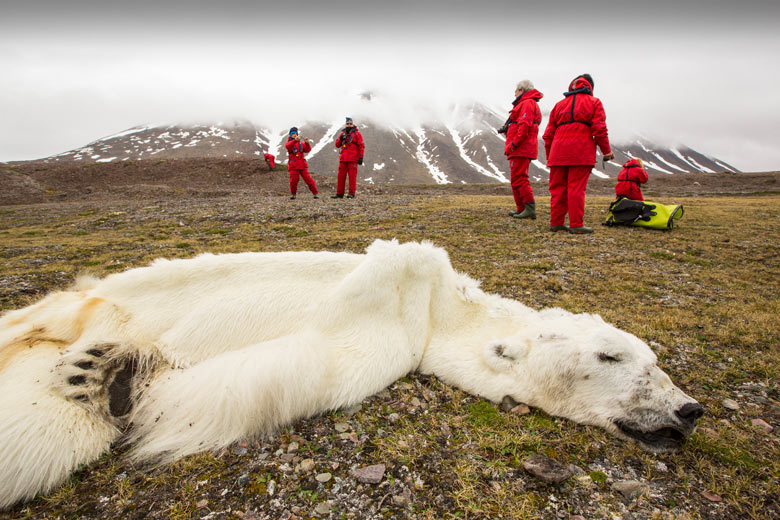
A heart-breaking image to see. A beautiful noble creature broken due to the affects of climate change.

We are responsible for this harrowing image. It's our responsibility to try to prevent it from happening again ...and again.
From The Guardian:

Dr Ian Stirling, now at Polar Bears International, said the bear had been in apparently good health when it was examined by scientists in April in southern Svalbard. It was found dead three months later in northern Svalbard, far from its normal range. Stirling said most of the fjords in Svalbard did not freeze normally last winter, driving the bear further afield in the hunt for food. From his lying position in death, Stirling said, the bear appears to simply have starved and died where he dropped, having been reduced to little more than skin and bone. Arctic sea ice fell to its lowest recorded level in 2012, which scientists say is due to global warming.

Saturday, 30 March 2013

You can help the rainforests and orang-utans this Easter

Palm oil has become the most used vegetable oil globally. It is used in a wide range of products, from use in cooking to chocolate and shampoo. It is easy and cheap to grow and therefore has become a major source of income for companies in countries such as Indonesia. As a result even more rainforest is being cut down, not only is this contributing to global warming, it's destroying the homes of many endangered species. Once rainforest is cut down, it cannot be replaced so these animals are losing their homes forever, ultimately resulting in extinction. No amount of palm oil should be able to justify this.

Sir Terry Pratchett presents the plight of the noble orang-utan, due to palm oil and rainforest destruction, in the very moving and enlightening programme Facing Extinction. I highly recommend you watch it. It has motivated me to do something, so I hope it can motivate you too.

When buying chocolate this Easter, and in the future, consider buying chocolate that hasn't been made with palm oil. If the demand for palm oil isn't there further rainforest will not be cut down to make room for palm trees. The list below outlines chocolate that does contain palm oil. Go here for a list of palm oil free chocolate.


Let's work together to protect the rainforests to combat climate change and protect the beautiful orang-utan.

Friday, 18 January 2013

What's so wrong with fighting for a better, greener world?

Another picture post to get you thinking :)

Consumerism isn't making us any happier so why do we do it, especially when it's so harmful?

Just because we can't see the damage we're doing, doesn't mean it isn't there

The issue with trying to 'fix' environmental problems with technology

Why it is important to have a mult-disciplinary approach, particularly with regards to the environment.


This is what I don't understand about climate change deniers

Is the environment a national security issue? Surely fighting for clean energy and sustainability  makes more sense than fighting each other over fossil fuels?

I just find this one amusing!
So what do YOU think about these?

Thursday, 17 January 2013

Land Grabs ... A Poverty and Environmental Issue

How would you feel if a foreign company claimed your home, your land and your livelihood as theirs and then sold it off? You would not be able to do anything about it or have any say. Your rights count for nothing, you are not even seen to have rights. No home, no money, no source of food and likely to have a large family depending on you, what would you do? This happens to thousands of people everyday, in third world countries, it needs to be stopped.

Oxfam are campaigning against Land Grabbing and I have been involved in this campaign with my local Falmouth Oxfam group. Oxfam have been claiming land and well known landmarks across the UK to raise awareness and encourage everyone to help their battle against land grabbing.


Our 'Sand Grab' at Gyllyngvase Beach in Falmouth

Governments, food exporters, tourism providers, Wall Street speculators and many more have seized land of all kinds and sizes for various resources in many poor countries including Honduras, Indonesia, Liberia and Sudan. Most of the investors are using this stolen land to export food back to rich countries. Others have used it to reach biofuel targets in the developed world. These companies are making the hunger and poverty issues we are already struggling to deal with much worse.

Land grabbing could also be a huge environmental problem. These large companies, as well as some of them using the land for mining and likely deforestation, are using the land to grow crops to export. But this is in a very unsustainable way, using large areas to grow just one crop with the use of pesticides and fertilisers. As a result in these harsh delicate environments, within a few years the land is ruined and no longer usable. Then these companies, no doubt, will seek to steal more farm land that is yet to be ruined, therefore, continuing the land grab process. It has been suggested that farming in this way is contributing to climate change and that the farming on small areas of land done by local people is sustainable and actually able to work against climate change. Vandana Shiva, Indian environmentalist and writer, discusses this in the video below. Definitely worth a watch and I agree with Shiva's suggestions. This video is actually focusing on geo-engineering, however, it considers similar issues to that of land grabbing and unsustainable farming by large foreign companies, especially in India.


The World Bank has begun to listen to Oxfam, however, we still need more support to bring it to an end.

Sign the Petition

Email your MP

It takes up about 2 minutes of your time :)

Tuesday, 13 November 2012

Cultural Implications of Climate Change

Check out this interesting article from my university website (below). It highlights the importance of being aware of all possible impacts of anthropogenic climate change and maybe changing our approach.


Cultural dimensions of climate change are underestimated, overlooked and misunderstood


The impact of climate change on many aspects of cultural life for people all over the world is not being sufficiently accounted for by scientists and policy-makers. University of Exeter-led research by an international team shows that cultural factors are key to making climate change real to people and to motivating their responses.
The impact of climate change on many aspects of cultural life for people all over the world is not being sufficiently accounted for by scientists and policy-makers. Experts at the University of Exeter led an international team in a study which shows that cultural factors are key to making climate change real to people and to motivating their responses.
From enjoying beaches or winter sports and visiting iconic natural spaces to using traditional methods of agriculture and construction in our daily lives, the research highlights the cultural experiences that bind our communities and are under threat as a result of climate change. The paper argues that governments’ programmes for dealing with the consequences of climate change do not give enough consideration to what really matters to individuals and communities.
Culture binds people together and helps them overcome threats to their environments and livelihoods. Some are already experiencing such threats and profound changes to their lives. For example, the Polynesian Island of Niue, which experiences cyclones, has a population of 1,500 with four times as many Niueans now living in New Zealand. The research shows that most people remaining on the island resist migrating because of a strong attachment to the island. There is strong evidence to suggest that it is important for people’s emotional well-being to have control over whether and where they move. The researchers argue that these psychological factors have not been addressed.
Lead researcher Professor Neil Adger, of the University of Exeter's Geography department, said: “Governments have not yet addressed the cultural losses we are all facing as a result of global climate change and this could have catastrophic consequences. If the cultural dimensions of climate change continue to be ignored, it is likely that responses will fail to be effective because they simply do not connect with what matters to individuals and communities. It is vital that the cultural impact of climate change is considered, alongside plans to adapt our physical spaces to the changing environment.”
Professor Katrina Brown, from the University of Exeter’s Environment and Sustainability Institute at the Cornwall Campus, adds: “The evidence is clear; when people experience the impacts of climate change in places that matter to them, the problems become real and they are motivated to make their futures more sustainable. This is as true in coastal Cornwall as in Pacific Islands.”
This work was funded by the Tyndall Centre for Climate Change Research, UK Economic and Social Research Council (K Brown Professorial Fellowship) and the Australian Government through CSIRO Adaptation Flagship and Australian Research Council.

Date: 9 November 2012

I have not really thought about the cultural implications of climate change in much detail before. I always felt they were of course an issue, however, other seemingly more serious affects always take up more of my consideration which is evidently what has happened with scientists and policy-makers. For example, the threats of death, starvation, famine, economic recession, to name but a few. I think the key point has been made here that the protection of unique ways of life need to be considered further and methods of adapting to change developed that also protect the culture of people's individual lives. Imagine the culture that makes up your life and society, the skills you have developed to exist in this society, the hobbies and places you enjoy, were all taken from you or made irrelevant because climate change had rendered them impossible? How can people easily adapt to this psychologically as well as physically? Wouldn't you find it to difficult to accept that this was happening and that those causing climate change hadn't even considered it?  Global warming will not just affect the earth's climate but our own personal climates that make up our lives and identities. It is unlikely that our lives will go untouched and, for me, adapting our lives to combat climate change and other environmental problems seems far more preferable to losing everything we hold dear.
Vital questions here we can consider. What do you think?

Monday, 12 November 2012

It's time we opened our eyes...

Here are some interesting images that really got me thinking, I hope they get you thinking too.

Consumerism - are we not just needlessly damaging our world, its people and it animals with this way of thinking?

We can make a difference if we work together

The U.S.A. leads the way in many aspects of Western culture, let's not follow its extreme consumerism

I know which one I'd rather be, how about you?

Perhaps it's time to work with nature and not against it before time runs out?

Can we not see the foolishness ad selfishness of our arguments against clean power? I personally think wind turbines are very attractive and quite serene in their own way

It's time we stopped being so naive, wouldn't you agree? 

How can one species cause so much destruction? 
The Climate Paradox. I already knew some of the issues this video depicts. However, I was mainly shocked and horrified. How are these actions justified in any way?


And, finally, a wonderful quote that I discovered on the internet which I think people need to remember (no idea who came up with, please let me know if you do!)

"We often forget that WE ARE NATURE. Nature is not something separate from us. So when we say we have lost our connection with nature, we've lost our connection with ourselves."


Tuesday, 4 September 2012

Save The Arctic


Please help Greenpeace in their current campaign Save The Arctic. The Arctic is vital to our planet and us. It will be even more difficult to combat climate change without it. On August 28th 2012, a new record for the amount of Arctic ice melt was announced and it has beaten the record three weeks before sea ice will reach its minimum extent this year. This shows that climate change is occurring for more rapidly than climate scientists predicted. This is possibly one of the most significant events of our lifetime and yet it was barely mentioned in the news and people continue to deny global warming is a serious problem. Just as George Monbiot writes (I have used information from his article in this post, link below at the bottom of this post) the date 28/08/2012 "marks the day when the world went raving mad."


There are 3 crucial reasons why we need to save the Arctic:


1.It is the home to many amazing species that exist in few other places in the world. It is also home for many people. We have no right to take this home from them just because we refuse to stop our reliance on fossil fuels.

2. Melting Arctic sea ice is going to increase the already rising sea level. Islands have already been lost, such as the Locahara Island that used to be near India. Low lying land will continue to be lost, for example Bangladesh, displacing thousands of people and species with it. These are major problems that the world's future governments will have to deal with. And those most affected are likely to be those with the least resources to manage the disaster.

3. The Arctic's survival is vital in helping us slow down global warming. The ice reflects the sun's light and sends it back into space. Where there is land without ice, far less light is reflected and it is instead caught by greenhouse gases, such as carbon dioxide, and contributes to heating the world's atmosphere. The more ice that melts the less sunlight is reflected back and the more heat is retained and therefore the more ice melts. Basically it's a downward spiral that we need to stop if we have any hope of combating further climate change.

Find out more about the campaign on the website Save The Arctic and please sign the petition, help us try to make a difference.

Also, check out George Monbiot's interesting article 'The Day the World went Mad'.

Friday, 24 August 2012

“I think having land and not ruining it is the most beautiful art that anybody could ever want.”

(Andy Warhol quote)

I found this artwork on StumbleUpon (unfortunately don't know who created it, please let me know if it's yours!) depicting the pollution we're doing to our planet. Interesting take on it I think, and pretty horrifying too. I feel it portrays humanity sitting idly by whilst seeing this pollution and destruction in front of us. Also it's evident this dark encroaching mass of industry and pollution is going to have a big impact on us soon. Humankind is literally on the edge of disaster. We have wrought and twisted the world into something unnatural and dirty. What do you think? Comments and debate welcome!


On a slightly lighter note, this was also on Twitter today, whatever your views on the environment and world issues you'll agree with these things, check it out (also I'm loving the Games of Thrones references!): 26 Things We Can All Agree On

Tuesday, 21 August 2012

Our Glorious English Summer

So yeah we've been having some pretty terrible and confusing weather this summer, even for Britain's standards! I immediately thought, as I listened in dismay to the pounding of rain on my bedroom roof in July, that these were likely to be the effects of human caused global warming and look who agrees with me! Read here

Scientists have explained that one of the likely effects of anthropogenic climate change is that dryer places will get dryer (hence why global warming is such an issue for Africa) and wetter places will get wetter. This could already be happening in the UK. It's easy for us not to think about climate change or the future problems it will cause because it seems so distant and unlikely to ever effect us. But it seems to me that we are already being very much affected by it. It isn't an invisible issue even though w continue to treat it as one.